
Achilles Tendinopathy: Treatment, Symptoms and Causes - Sydney
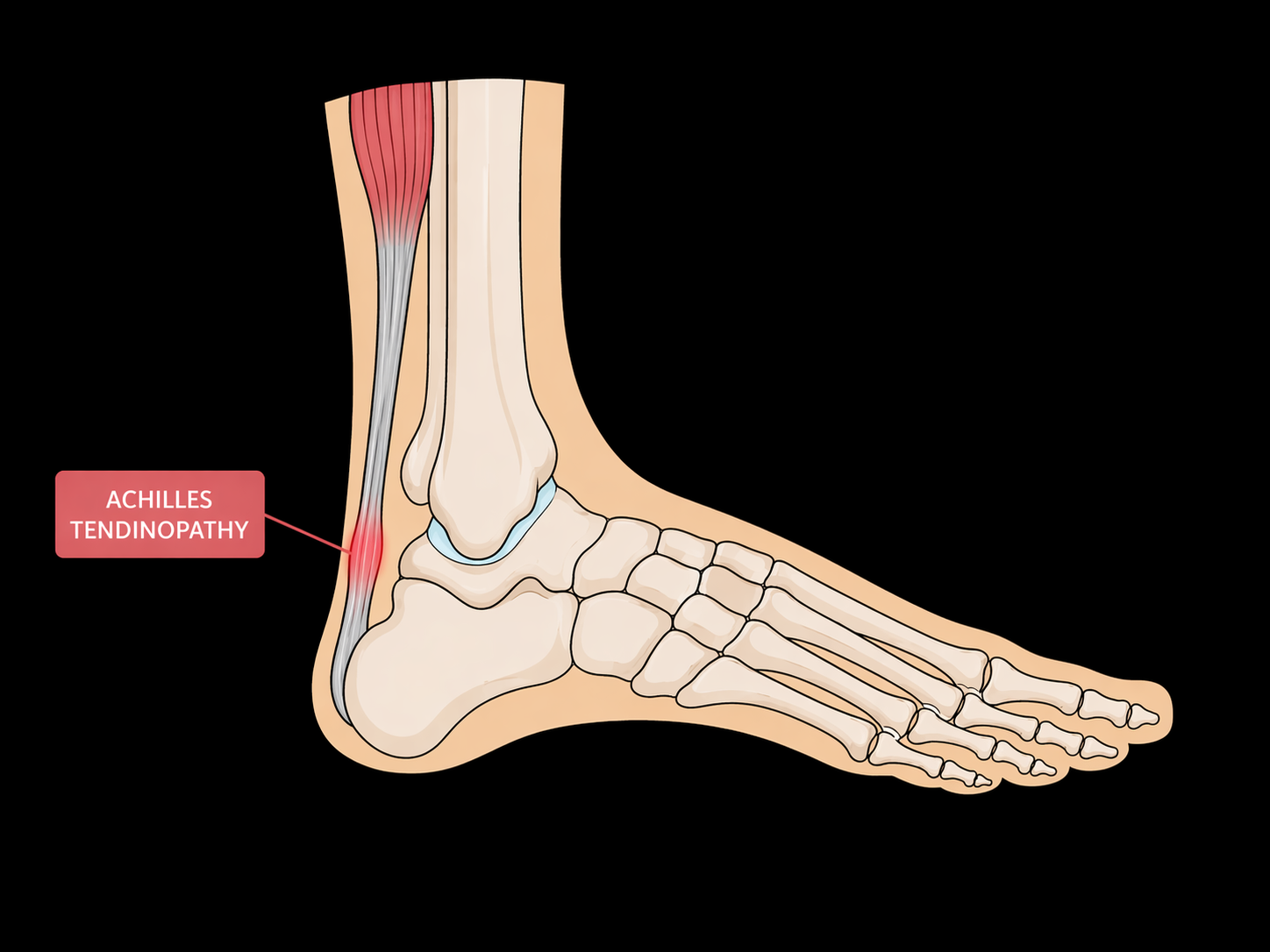
Achilles tendinopathy is a condition involving pain, swelling, and stiffness in the Achilles tendon. The Achilles tendon connects the calf muscles to the heel bone and plays an important role in movements such as walking and running.
Pain is often most noticeable in the morning. It may improve as you move around during the day, although the level of discomfort can vary. Symptoms can also feel worse after periods of inactivity and may reduce once the body warms up and becomes more mobile.
Achilles Tendinopathy: Treatment, Symptoms and Causes - Sydney
Achilles tendinopathy is a condition involving pain, swelling, and stiffness in the Achilles tendon. The Achilles tendon connects the calf muscles to the heel bone and plays an important role in movements such as walking and running.
Pain is often most noticeable in the morning. It may improve as you move around during the day, although the level of discomfort can vary. Symptoms can also feel worse after periods of inactivity and may reduce once the body warms up and becomes more mobile.
Symptoms
Symptoms of Achilles tendinopathy may include:
- Pain in the Achilles tendon
- Swelling in the Achilles tendon
- Stiffness in the Achilles tendon
- Pain more noticeable in the morning
- Symptoms that improve with movement during the day
Causes
The Achilles tendon is a thick, fibrous tendon that connects the calf muscles to the heel bone. Because it plays a key role in walking, running, and other activities, it is exposed to repeated stress.
Achilles tendinopathy commonly develops when the load placed on the tendon exceeds its capacity to tolerate it. This can lead to small amounts of change within the tendon structure over time. However, other factors may also contribute to its development.
Several factors may contribute to its development, including:
- Overuse or repetitive stress placed on the tendon
- Sudden increases in activity levels or training intensity
- Reduced strength in the lower limb
- Tight calf muscles or inappropriate footwear
- Age-related changes within the tendon
Diagnosis
When assessing Achilles tendinopathy, it is important to differentiate between the insertional and midportion regions of the Achilles tendon, as well as surrounding structures such as the paratenon. These areas have different anatomical and functional characteristics, which can influence treatment and rehabilitation strategies.
Mid-portion Achilles tendinopathy
This involves the middle section of the tendon, typically 2–6 cm above the heel bone. Pain is often felt during or after activity and may be associated with thickening of the tendon.
Insertional Achilles tendinopathy
This occurs where the tendon attaches to the heel bone. Pain is usually localised at the back of the heel and may be aggravated by pressure from footwear or activities such as walking uphill.
Achilles Tenosynovitis (Paratenonitis)
This involves irritation of the paratenon, the thin tissue surrounding the Achilles tendon. Pain is often more diffuse along the tendon and may be accompanied by stiffness or a creaking sensation with movement.
Diagnosis is based on reported symptoms and clinical testing performed by a podiatrist. Assessment may include:
- Palpation (touching) of the painful area
- Evaluation of joint range of motion
- Assessment of walking or running patterns
At Sports Podiatry Manly, we utilise a pressure plate treadmill system (Zebris) to analyse plantar pressures within the feet during movement.
In more severe cases, ultrasound or MRI imaging may be recommended to further assess the tendon, although imaging is generally not required.
Treatment
Management of Achilles tendinopathy focuses on balancing activity levels while reducing stress on the tendon. Rather than completely stopping exercise, treatment typically aims to manage load appropriately to help reduce symptoms.
A structured exercise rehabilitation program is considered a key part of treatment and aims to gradually improve the tendon’s capacity to tolerate load over time.
Anti-inflammatory medications (NSAIDs), either topical or oral, may be helpful in managing symptoms in some Achilles Tenosynovitis (Paratenonitis) cases. These should be used under the guidance of a GP or pharmacist.
Additional treatment options that may be incorporated include:
- Dry needling
- Shockwave therapy
- Personalised footwear recommendations
- Soft tissue massage
- Orthotic prescription
- Foot mobilisation
- Taping techniques
With consistent and appropriate treatment, many individuals notice improvement within several weeks. Full recovery can vary and may take up to 6–12 months depending on the severity of the condition.
For individuals seeking assessment and treatment for Achilles tendinopathy in Sydney, Sports Podiatry Manly provides comprehensive podiatry care and personalised management plans tailored to each patient.
Achilles tendinopathy can impact daily activity and exercise due to pain, stiffness and reduced comfort in the tendon. Early assessment helps determine whether the condition involves the insertional or midportion of the tendon and guides appropriate management.
At Sports Podiatry Manly in Sydney, our podiatrists provide thorough clinical assessment and personalised management plans using advanced diagnostic technology. If you are experiencing ongoing Achilles tendon pain, stiffness, or discomfort during activity, booking an assessment may help determine suitable treatment options.

Manly NSW 2095, Australia
*ENTRY via Whistler St*