
Morton’s Neuroma: Treatment, Symptoms and Causes Sydney
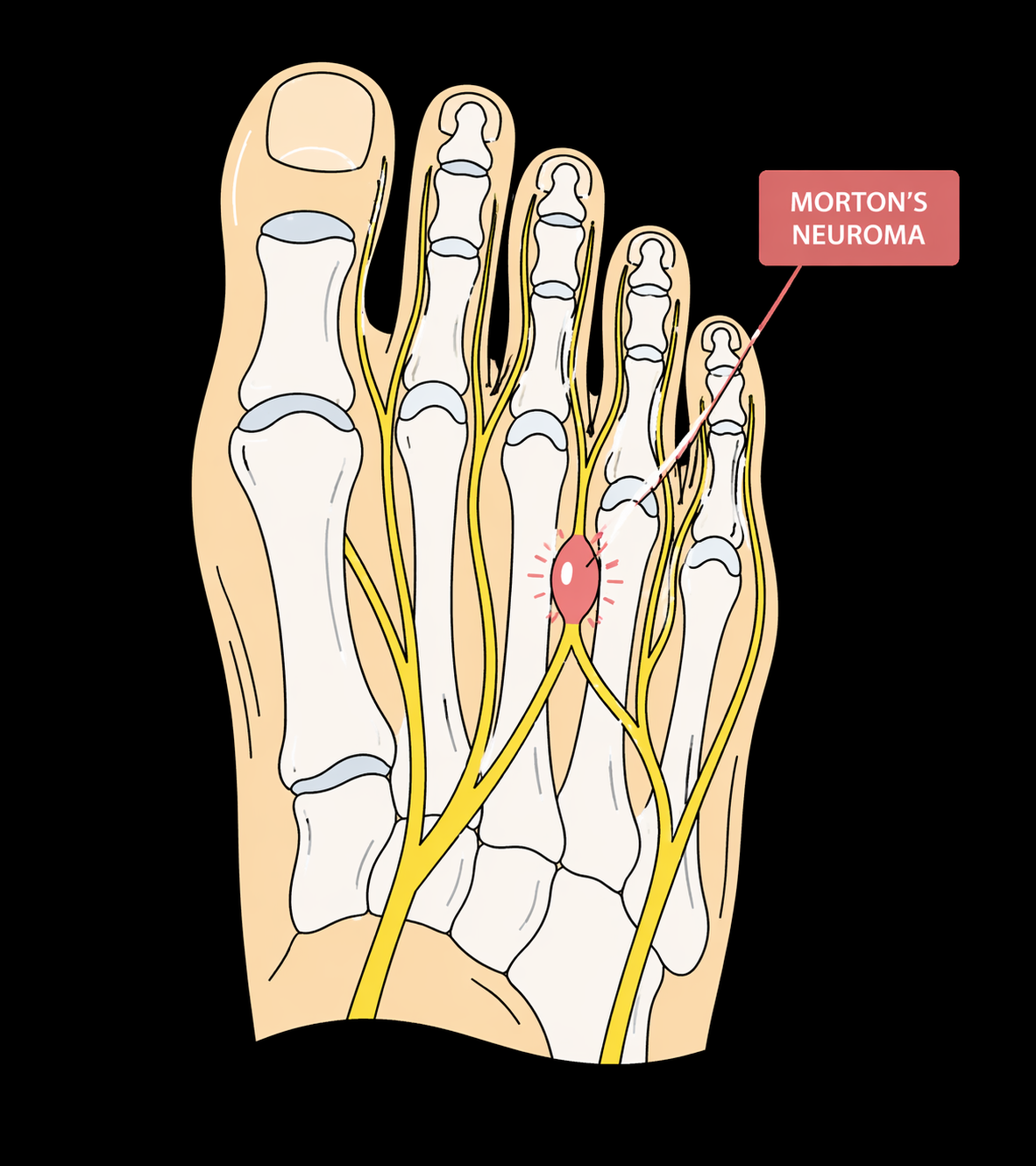
Morton’s Neuroma is a condition characterised by pain or pins and needles (paraesthesia) in the ball of the foot. This discomfort is most commonly experienced between the third and fourth toes. Some people may also notice a clicking sensation or feel as though they are walking or running on small pebbles.
Morton’s Neuroma: Treatment, Symptoms and Causes Sydney
Morton’s Neuroma is a condition characterised by pain or pins and needles (paraesthesia) in the ball of the foot. This discomfort is most commonly experienced between the third and fourth toes. Some people may also notice a clicking sensation or feel as though they are walking or running on small pebbles.
Symptoms
- Pain in the ball of the foot
- Pins and needles (paraesthesia) in the forefoot
- Discomfort most commonly between the third and fourth toes
- A clicking sensation in the foot
- Feeling like walking or running on small pebbles inside the shoe
Causes
Within the foot, a network of nerves runs between the shafts of the foot bones (metatarsals). These nerves play an important role in providing sensation and assisting foot movement. Morton’s Neuroma develops when there is a benign growth or thickening of nerve tissue between the metatarsals.
The exact cause of Morton’s Neuroma is not fully understood. However, several factors may contribute to its development, including:
- Trauma, either from a specific injury or repeated pressure applied to the ball of the foot
- Ill-fitting footwear, particularly shoes with narrow toe boxes or high heels
- A high arch foot type
- Tight calf muscles
- Natural ageing, which may result in thinning of the cushioning under the foot (plantar fat pad atrophy)
- Certain health conditions, including diabetes and vascular disease, which may increase the risk of development
Diagnosis
Diagnosis of Morton’s Neuroma involves a combination of reported symptoms and clinical examination performed by a podiatrist.
Assessment may include:
- Palpation (touching) of the affected area
- Evaluation of joint mobility
- Assessment of walking or running patterns
At Sports Podiatry Manly, we utilise specialised equipment including a pressure plate treadmill system (Zebris). This technology allows for detailed analysis of plantar pressures across the feet during movement.
If considered appropriate, your podiatrist may also recommend radiographic or ultrasound imaging to assist in tailoring an individual management plan.
Treatment
Morton’s Neuroma is considered a lasting condition, and management approaches vary depending on individual presentation and severity. Treatment duration may range from approximately two to six weeks for acute presentations and may extend beyond six weeks in cases.
Conservative management options may include:
- Footwear modifications
- Custom orthotic prescription
- Shockwave therapy
- Foot and ankle exercises
If conservative management does not provide sufficient symptom relief, further treatment options such as oral/injectable medication or surgical intervention may be considered.
Post surgical treatment, your podiatrist may assist with post-operative care. This can include specific foot exercises, footwear adjustments and the use of custom orthotics.
Morton’s Neuroma can affect comfort and daily activity, particularly when pain develops in the ball of the foot. Assessment by a podiatrist helps guide appropriate management based on individual presentation and contributing factors.
At Sports Podiatry Manly, our podiatrists provide thorough clinical assessment and personalised management plans using advanced diagnostic technology. If you are experiencing ongoing forefoot discomfort or nerve-related symptoms, booking an assessment may help determine suitable treatment options.

Manly NSW 2095, Australia
*ENTRY via Whistler St*